

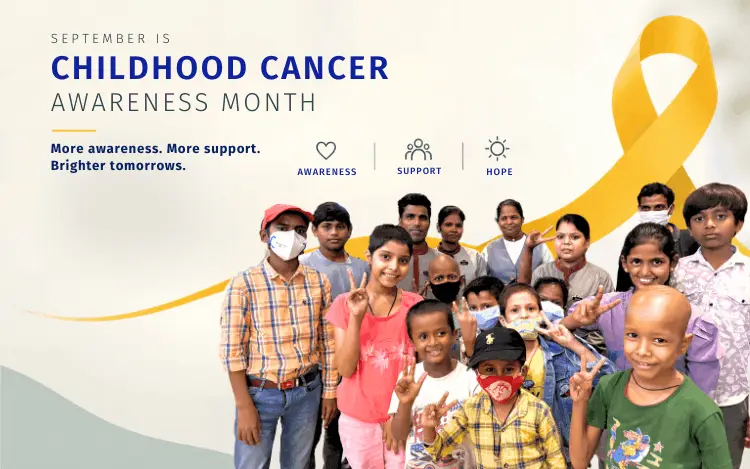
Every September, hospitals, patient groups, and cancer organizations around the world observe Childhood Cancer Awareness Month—a dedicated period to raise visibility for something that gets far less public attention than it deserves. There’s a particular kind of fear that comes with a child being unwell, a fear that gets so much sharper the moment the word “cancer” enters the conversation. It’s one of the hardest things a parent can face, made harder still by how differently cancer shows up in children compared to adults. This piece marks Childhood Cancer Awareness Month by walking through what childhood cancer actually is, why it’s so easy to miss early on, the main types parents should know about, and what support genuinely looks like once a diagnosis has been made.
Why Childhood Cancer Awareness Month Matters
Childhood Cancer Awareness Month exists because childhood cancer, while rare, remains one of the most under-recognized health issues facing families today. The observance brings together patient stories, awareness campaigns, and a renewed push to help parents and doctors alike catch warning signs earlier—before a delay in diagnosis costs a child valuable time.
Childhood Cancer Is Rare—But It Isn’t Rare Enough
Cancer can affect a person at any age, including childhood, though it remains uncommon in children compared to adults. Globally, several hundred thousand children are diagnosed with cancer each year, and in India alone, tens of thousands of new childhood cancer cases are identified annually. That’s not a small number, even though it’s a small fraction of overall cancer cases nationwide.
There’s genuine reason for hope in these numbers too. In many high-income countries, survival rates for certain childhood cancers now reach 80–90%, and even with more conservative estimates closer to 70%, a growing population of childhood cancer survivors is living full lives well into adulthood. Outcomes tend to be strongest when children are treated at dedicated pediatric cancer units, staffed by teams who specialize specifically in how cancer behaves—and how treatment should be tailored—in a still-developing body.
Why Childhood Cancer Is So Easy to Miss
Adults can often notice when something feels wrong in their own bodies. Children, especially younger ones, can’t always describe what they’re feeling, and even when they can, early symptoms of childhood cancer tend to look almost identical to the ordinary bumps, bruises, and minor illnesses that fill up any normal childhood. That overlap is exactly why so many cases in India are only caught after the cancer has already progressed or spread.
A handful of signs are worth taking seriously if a child experiences them persistently, rather than as an isolated, one-off symptom:
- Unexplained, continued weight loss
- Headaches, particularly ones paired with early-morning vomiting
- Ongoing swelling or pain in the bones, joints, back, or legs
- A lump or mass anywhere on the body, especially in the abdomen, neck, chest, or armpit area
- A whitish appearance developing in the pupil of the eye, or any noticeable change in vision
- Fevers that keep returning without any clear infection behind them
- Bruising or bleeding that seems excessive or comes on suddenly
- Paleness or tiredness that doesn’t resolve and starts to feel out of character
None of these symptoms mean cancer on their own—most of the time, something far more ordinary is behind them. But when they persist, or several show up together, they’re worth a doctor’s attention rather than a wait-and-see approach.
What Actually Causes Childhood Cancer
Here’s something that tends to surprise parents: childhood cancers don’t generally have a single, identifiable cause the way some adult cancers are linked to lifestyle factors like smoking. Research points to genetic changes—mutations inside a child’s cells—as a contributing factor in a meaningful share of cases, with studies suggesting somewhere around 5 to 10% of childhood cancers are tied to inherited or acquired genetic factors. For the majority of cases, though, no clear cause is ever identified, which can be one of the hardest parts for parents to sit with—there was nothing to have seen coming and nothing that could have been prevented.
The Main Types of Childhood Cancer
Childhood cancers are strikingly different from adult cancers in where they originate. While adult cancers tend to develop in specific organs, childhood cancers more often arise in tissues—blood-forming cells, the lymphatic system, the nervous system, muscle, and bone.
Leukemias, cancers of the blood-forming cells in the bone marrow, are among the most common childhood cancers. They disrupt the body’s normal production of blood cells, which is why symptoms like paleness, fatigue, and unusual bruising often show up early.
Lymphomas develop in the lymphatic system and split broadly into Hodgkin lymphoma, which responds very well to treatment in most cases, and non-Hodgkin lymphoma, where the outlook depends more heavily on the specific subtype involved.
Brain and spinal cord tumors form in the tissues that control much of how the body functions. Some are benign and can be fully treated with surgery alone; others require a more involved combination of treatments.
Bone cancers, including osteosarcoma and Ewing sarcoma, occur more often in children and young adults than in older adults, and typically involve a mix of surgery, chemotherapy, and sometimes radiation.
Neuroblastoma develops in immature nerve cells, most often in very young children, and usually begins near the adrenal glands, though it can appear in the neck, chest, or spine as well.
Wilms’ tumor arises in the kidney, most commonly between ages two and four, and is treated very differently from adult kidney cancers—with cure rates that are notably high when caught early.
Rhabdomyosarcoma, the most common soft-tissue cancer in children, typically begins in the muscles that help the body move.
Retinoblastoma is a rare eye cancer, usually affecting children under five. One of its most recognizable early signs is an unusual white reflection in the pupil, sometimes first noticed in a photograph where the healthy eye shows the normal red-eye effect from a camera flash but the affected eye doesn’t. Caught early, it’s highly treatable, and treatment can often preserve both vision and the eye itself.
Diagnosis and Treatment
Because there’s no routine screening test for childhood cancer in children without a known risk factor, early diagnosis depends heavily on three things coming together: a family noticing something isn’t right and seeking care, a doctor properly evaluating and staging what’s found, and the family then being able to access appropriate treatment without unnecessary delay. Children with a family history of cancer may warrant closer, more regular medical attention, since genetic risk factors can run in families.
Once diagnosed, treatment for childhood cancer commonly involves some combination of surgery, chemotherapy, radiation therapy, immunotherapy, or stem cell transplant, with the specific protocol shaped by the exact cancer type and stage. A dedicated pediatric oncology team will walk families through exactly what that plan looks like for their child.
Life After Treatment: Survivorship and Late Effects
Finishing treatment isn’t the end of the story—it’s the start of a new phase that deserves just as much attention. Survivors need ongoing follow-up to monitor for late effects, which can include impacts on growth and development, cognitive or emotional effects, heart or lung complications, hormonal changes, or, in some cases, a second cancer later in life. Not every survivor experiences these effects, but catching them early, when they do occur, makes a real difference—sometimes through growth hormone support, hearing aids, fertility guidance, or other targeted care.
Supporting a Family Through Childhood Cancer
Watching a child go through cancer treatment is one of the most difficult experiences a parent can face, and the fear and exhaustion that come with it are entirely normal, not something to push through silently. A few things tend to help:
- Ask the pediatric oncology team direct questions. Understanding the diagnosis, the treatment options, and what to expect helps families feel steadier making decisions.
- Talk to other families who’ve been through it. Many hospitals and support groups connect parents with others who understand exactly what this experience feels like.
- Let someone in—a friend, a family member, a counsellor. Carrying this alone isn’t sustainable, and it isn’t necessary.
- Lean on the people around you. Friends and family can carry real, practical weight during treatment, even in small ways.
Most children who complete treatment go on to live full, ordinary lives—a genuinely hopeful fact worth holding onto through the hardest parts of the journey. This is exactly what Childhood Cancer Awareness Month is meant to reinforce: not ignoring persistent symptoms, seeking care early, and making sure the whole family—not just the child—has support along the way. At CanSupport, our counselling and caregiver support extends to families navigating exactly this kind of fear and exhaustion, because a child’s illness reshapes the whole household, not just the patient at its centre.
Article Author: indiancancersociety.org
When is Childhood Cancer Awareness Month observed?
Every September, globally and in India, to raise awareness of childhood cancer, its warning signs, and the importance of early diagnosis.
How common is childhood cancer?
It’s relatively rare compared to adult cancer but far from negligible—tens of thousands of new childhood cancer cases are diagnosed in India every year, and several hundred thousand globally.
What are the early warning signs of childhood cancer?
Persistent, unexplained weight loss, headaches with early-morning vomiting, ongoing bone or joint pain, an unusual lump, changes in the eye’s appearance, recurring unexplained fevers, excessive bruising, and prolonged paleness or tiredness are all worth a doctor’s attention if they don’t resolve.
What causes childhood cancer?
Most cases don’t have a single identifiable cause. Genetic changes are believed to contribute to roughly 5–10% of cases, while the majority occur without any clear, preventable trigger.
Is childhood cancer curable?
Many childhood cancers respond very well to treatment, especially when caught early. Survival rates for several types now reach 70–90% in settings with strong pediatric oncology care.
What are the most common types of childhood cancer?
Leukemias and lymphomas are among the most common, alongside brain and spinal cord tumors, bone cancers like osteosarcoma and Ewing sarcoma, neuroblastoma, Wilms’ tumor, rhabdomyosarcoma, and retinoblastoma.