

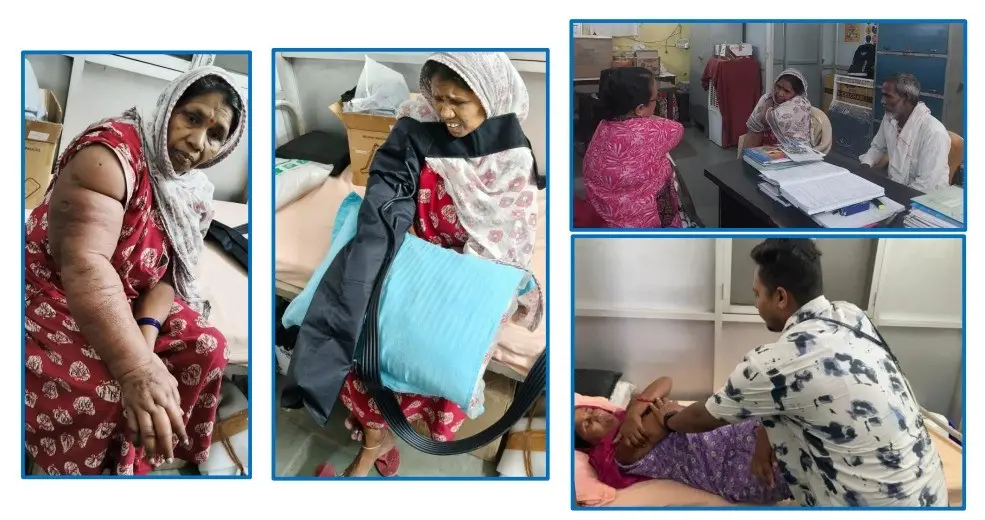
When 56-year-old Subhadra first walked through the doors of CanSupport’s East Outpatient Clinic, she carried the burden of more than just a year-long battle with breast cancer. Beside her stood her devoted husband, who had travelled with her from a small village in Uttar Pradesh. Like thousands of families uprooted by illness, they had left behind everything familiar, drawn to Delhi by a quiet, desperate hope for more time.
Yet, their struggle extended far beyond the disease itself. Crippled by severe financial hardship and unable to afford a room, the couple spent their days and nights sleeping in the open premises of the Delhi State Cancer Institute (DSCI). They endured extreme weather in harsh conditions, confined to a limited space on bare concrete, with no choice but to persist in a state of helplessness. The situation made basic caregiving almost impossible and broke the hearts of all who witnessed it.
Amid these overwhelming circumstances, the CanSupport team stepped in to anchor the family through every stage of her illness.
Starting with comprehensive physical relief, the doctor regulated her pain medication, nurses provided prompt clinical care, and the physiotherapist addressed her painful, swollen lymphedema. With compassionate care, she experienced a sense of relief after a long time.
However, as the cancer advanced, fear and uncertainty began to take a heavy emotional toll. The counsellors introduced targeted relaxation therapy and gentle counselling sessions to help Subhadra navigate her distress. The team continued to provide guidance, ensuring that despite her living conditions, she received respectful, attentive care.
When Subhadra’s illness progressed to its final stage and active treatments were no longer viable, the team advised shifting the focus entirely to comfort care. The counsellors gently initiated a sensitive conversation with her husband about returning home to their village, where she could spend her remaining days surrounded by family. For him, accepting this shift was agonizing, and even the thought of leaving Delhi felt like giving up on his wife.
Over patient, compassionate counselling sessions, our team listened to his fears. We acknowledged his deep devotion and helped him understand that genuine care isn’t about remaining in a crowded hospital courtyard, but about ensuring comfort, love, and peace. Reassured that our team would continue guiding them remotely, he finally mustered up the courage to take her home.
Subhadra spent her final days where she truly belonged—in the familiar warmth of her own home, surrounded by the people who loved her most. She passed away peacefully, wrapped in dignity, comfort, and love.
Subhadra’s story is a poignant reminder of the true essence of palliative care: when curing is no longer possible, success is measured by easing pain, preserving dignity, and helping families find peace. Sometimes, the most healing place isn’t another hospital. It is simply home.